
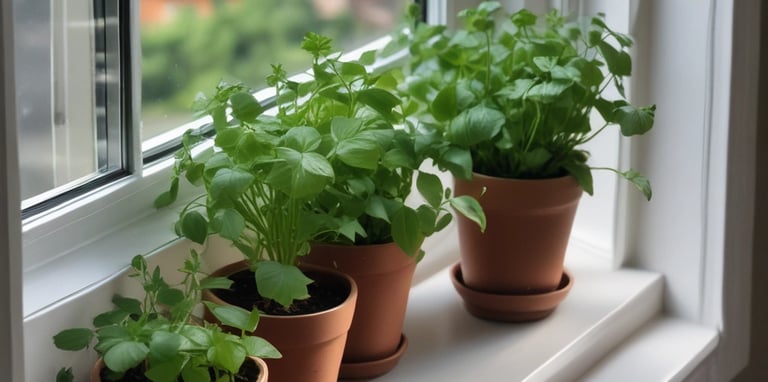
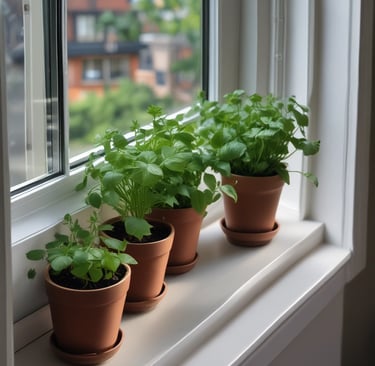
The Windowsill Revolution: How to Start Your Apartment Homestead with 3 Simple Herbs
As an Amazon Affiliate I earn a small commission on qualifying purchases at no cost to you.
Do you ever find yourself staring at those $4 plastic clamshells of organic basil at the grocery store, knowing they’ll be slimy in the back of your fridge by Tuesday?
I used to think that "homesteading" was a lifestyle reserved for people with rolling hills and a tractor. I thought I had to wait for the "perfect" backyard to start producing my own food. But the truth is, homesteading is a mindset, not a zip code. If you have a windowsill and fifteen minutes, you have a farm. Here is how to start your apartment homestead today with the "Big Three" beginner-friendly herbs.
Why Herbs are the Perfect First Step
Herbs are the "gateway drug" of urban homesteading. They don't require deep soil, they thrive in pots, and they provide instant gratification. Plus, from a culinary standpoint, nothing beats the punch of a leaf plucked seconds before it hits your pasta.
1. Basil: The Sunny Window King
Basil is the crown jewel of the indoor garden. It’s incredibly communicative—it will literally wilt to tell you it’s thirsty, then perk back up within an hour of watering.
Detailed Instructions:
Light: Needs at least 6 hours of direct sun. If your kitchen is dark, this is where a SANSI Grow Light becomes essential.
Sowing: If starting from seed, plant them about 1 inch deep.
Watering: Basil hates "wet feet." Ensure your pot has drainage holes. Water when the top inch of soil feels dry to the touch.
The Secret Hack: Never "pull" leaves off. Always pinch the stem just above a leaf node (where two leaves meet). This tells the plant to grow two new branches, making your basil bushier and more productive.
2. Mint: The Unstoppable Producer
Mint is famous for its vigor. In a backyard, it’s an invasive weed; in an apartment, it’s a refreshing, constant supply for teas and cocktails.
Detailed Instructions:
Light: Prefers bright light but is much more tolerant of partial shade than basil.
The Golden Rule: Always grow mint in its own container. It has aggressive roots (runners) that will choke out any other plant sharing its pot.
Watering: Mint likes to stay moist. Don't let the soil dry out completely.
Harvesting: Cut from the top. Frequent harvesting actually keeps the plant from getting "leggy" and woody.
3. Chives: The Low-Maintenance Workhorse
Chives are the unsung heroes of the windowsill. They are hardy, perennial (they’ll keep coming back), and take up very little horizontal space.
Detailed Instructions:
Light: They are very forgiving and can handle the lower light levels of an apartment better than most Mediterranean herbs.
Planting: Chives grow in clumps. If you’re buying a starter plant, you can actually "divide" the root ball into two pots to double your harvest.
Watering: They like consistent moisture but are very drought-tolerant if you forget them for a few days.
Harvesting: Use a pair of sharp kitchen shears to snip the leaves about 2 inches above the soil line. They will regrow from the base like grass!
The Apartment Homestead Starter Toolkit
To ensure your first "harvest" is a success, you only need a few basics. Avoid the temptation to buy huge bags of outdoor garden soil—it’s too heavy and won't drain properly in a small pot.
You can start your herbs from seeds or buy plants from you local garden center.
Potting Mix: Look for a lightweight "Indoor Potting Mix" with perlite for aeration. Miracle Grow Indoor Organic Potting mix is one of my favorites.
Containers: Terracotta is great because it "breathes," but if you're prone to forgetting to water, a glazed ceramic or plastic pot holds moisture longer. These Terracotta pots on Amazon are a great deal and come with the saucers.
Drainage Trays: Don't ruin your windowsill! Every pot needs a saucer to catch excess water.
Your Homestead Starts Today
You don't need to be self-sufficient tomorrow. You just need to be a little more self-sufficient than you were yesterday. Start with one pot of basil. Master the "pinch." Watch it grow.